
Users and Audience
The audience is beginning Japanese learners. Due to the large variety of vowel sounds in the English language, English speakers often fail to realize that Japanese vowel sounds are much more limited.
Objectives
Provide a pronunciation overview of the five major vowel sounds in the Japanese language.
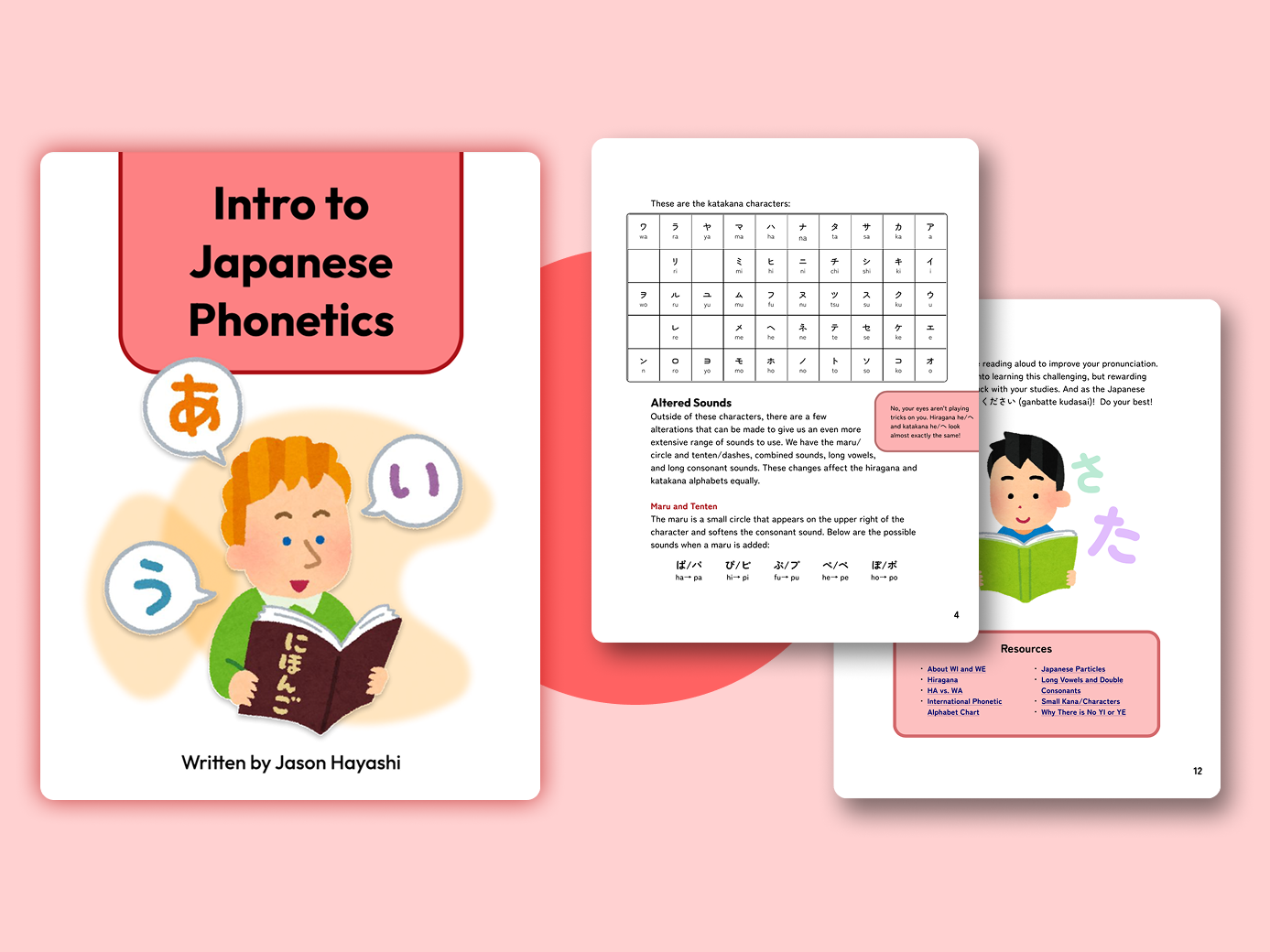
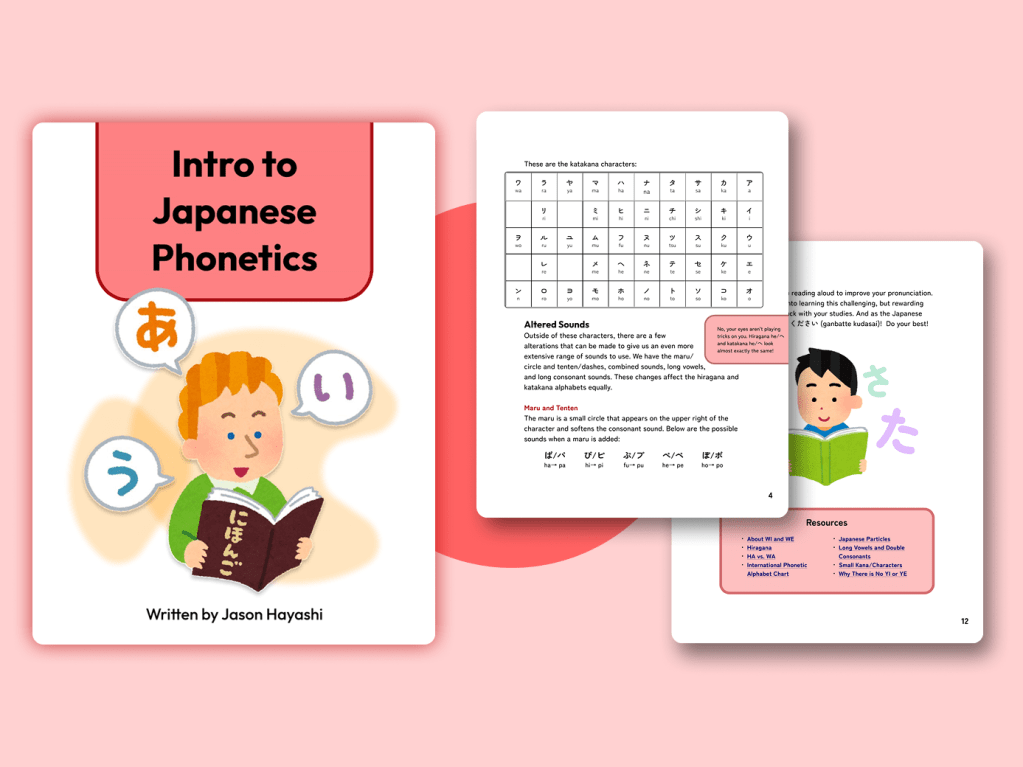
Show the hiragana and katakana writing symbols and their use cases and differences.
Explain the different vowel and consonant variants for the hiragana and katakana symbols.
Discuss the sounds that are uncommon in English and demonstrate how to enunciate them.
Thought Process
I wanted to provide some English words to help beginners understand the five major vowel sounds. I also made sure to explain how the “alphabet” in Japanese works differently than the English one by explaining that many of the characters are consonant-vowel pairs. Providing the hiragana and katakana alphabets allows beginners to not only practice making the sounds, but serves as a visual reference so beginners can learn to recognize and read these sounds.
I discussed the visual markers that indicate the sound of a character has changed, as well as how some characters serve grammatical purposes when used by themselves.
It’s easy for learners to see kanji (Chinese characters) and become intimidated by the amount they have to learn. As such, I explained that while the alphabets are a good foundation for understanding the sounds in Japanese, graduating to kanji becomes necessary later on, as many Japanese words are identical in pronunciation.
Finally, using my experience as a Japanese teaching assistant and my own learning journey, I identified the Japanese sounds that don’t appear often in English and explained how to enunciate them.
 Hayashi Designs